Unveiling Ichthyotitan: The 82-Foot Shastasaurid That Dominated Triassic Seas
Imagine a colossal leviathan, longer than two city buses, silently patrolling the ancient oceans. This isn't a creature of myth, but a real-life giant that once swam the Late Triassic seas: Ichthyotitan. Discovered from fragmentary remains in the Westbury Mudstone Formation in Somerset, England, this incredible shastasaurid ichthyosaur has rocked the paleontological world, staking its claim as potentially the largest marine reptile currently known.
At an astonishing estimated length of nearly 25 metres (82 feet), Ichthyotitan rewrites our understanding of prehistoric marine life, extending the known timeline for giant ichthyosaurs and offering compelling evidence that these magnificent creatures were thriving right up until the dramatic Triassic-Jurassic extinction event. Join us as we dive into the incredible story of its discovery, its immense scale, and what this fossilized titan reveals about the ancient world.
What is Ichthyotitan? A Shastasaurid Giant from the Late Triassic
Ichthyotitan, scientifically known as I. severnensis, belongs to an extinct genus of truly colossal ichthyosaurs. These marine reptiles, often described as having a dolphin-like or fish-like body plan, were formidable predators of the Mesozoic Era. While many ichthyosaur species were comparable in size to modern dolphins, Ichthyotitan stood apart, representing the pinnacle of gigantism within its lineage.
Classified within the family Shastasauridae, Ichthyotitan holds particular significance. Shastasaurids were known for their large size, but the existence of Ichthyotitan pushes their range a staggering 13 million years further into the Late Triassic period, specifically the Rhaetian stage. This discovery challenges previous assumptions about the decline of shastasaurids, suggesting they were not only surviving but flourishing right up until the devastating Triassic-Jurassic extinction event. This event, which saw the demise of many marine and terrestrial species, marked a major turning point in Earth's history, paving the way for the age of dinosaurs to truly begin. The fact that a creature of Ichthyotitan's magnitude was present until this precipice underscores the incredible resilience and adaptability of these ancient ocean rulers.
Found exclusively within the marine sediments of the Westbury Mudstone Formation in Somerset, England, the fossil record of Ichthyotitan paints a picture of a dominant apex predator in the ancient European seas. Its very existence forces us to reconsider the ecological dynamics and biodiversity of the Late Triassic oceans.
Glimpsing Gigantic Proportions: Estimating Ichthyotitan's Immense Size
The most breathtaking aspect of Ichthyotitan is undoubtedly its colossal size. With an estimated body length of nearly 25 metres (82 feet), it dwarfs almost every other known marine reptile, potentially surpassing even the largest pliosaurs and mosasaurs that came later in the Mesozoic. To put this into perspective, Ichthyotitan would have been roughly the length of a blue whale, the largest animal on Earth today, and significantly longer than a standard basketball court.
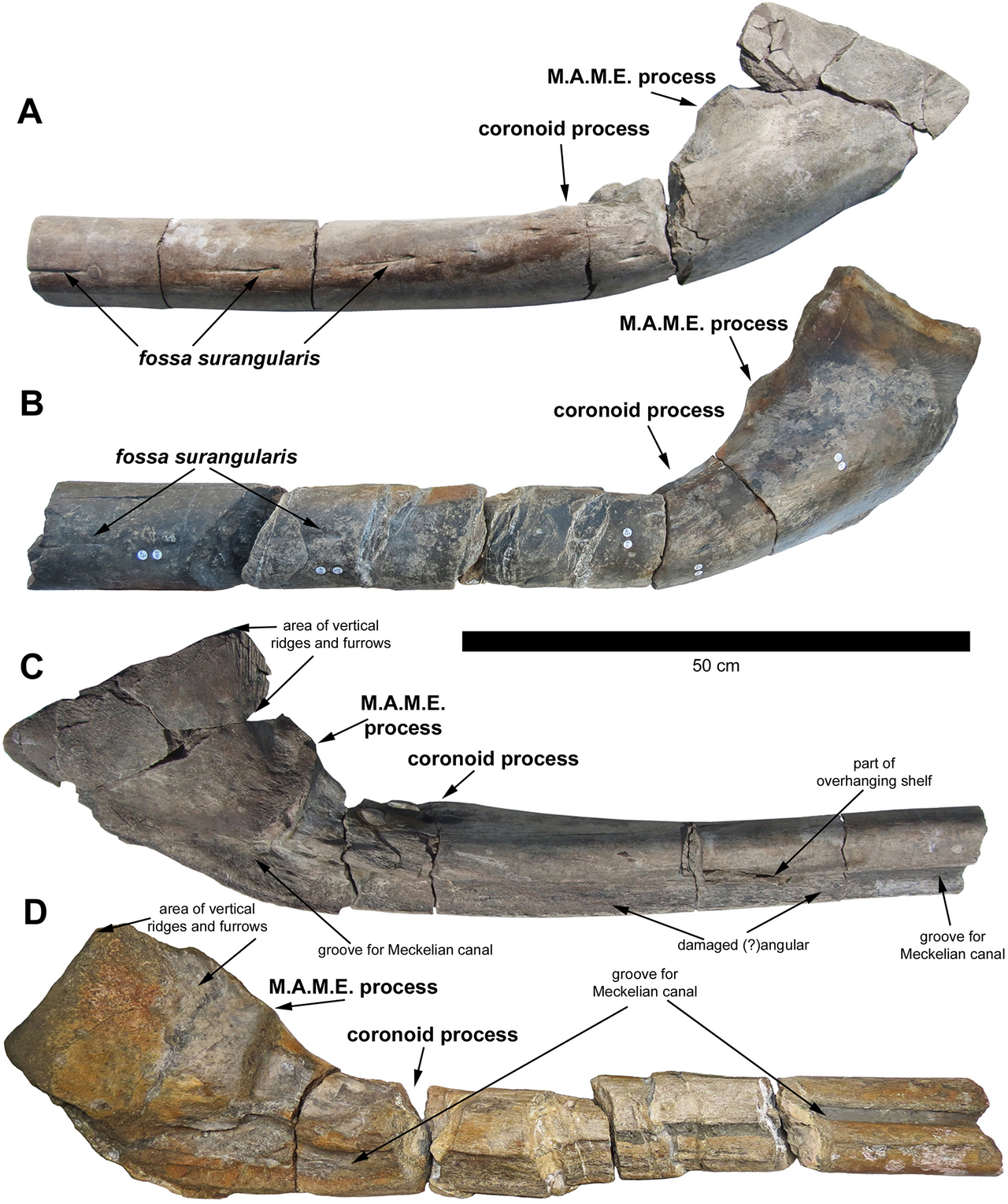
This staggering estimate isn't based on a complete skeleton, which is often the case with ancient giants. Instead, the size of Ichthyotitan has been meticulously calculated by scaling up from two fragmentary surangular bones of the lower jaw. These robust jaw fragments, while incomplete, provide crucial anatomical landmarks that allow paleontologists to infer the overall body size by comparing them to the more complete skeletons of related, albeit smaller, ichthyosaur species. This method, while requiring careful scientific validation, is a standard practice in paleontology when faced with limited fossil evidence. The sheer scale of these jaw fragments alone—one measuring 96 centimetres (3.15 feet) in length—hints at a creature of truly unbelievable dimensions.
Previously, the title of the largest known ichthyosaur was often attributed to Shonisaurus sikanniensis, which reached an impressive 21 metres (70 feet). However, Ichthyotitan now stands poised to claim this record, pushing the boundaries of what we thought possible for marine reptile gigantism during the Triassic. This extraordinary size suggests Ichthyotitan was an apex predator, a gentle giant, or perhaps something in between, dominating its ecosystem with unparalleled scale.
The Serendipitous Discovery of Ichthyotitan: A Tale of Fossil Hunting and Reinterpretation
The story of Ichthyotitan's emergence from geological obscurity is as fascinating as the creature itself, beginning with dedicated fossil hunters and leading to significant reinterpretations of existing finds. The initial breakthrough came in 2016 when researcher and fossil collector Paul de la Salle discovered the first significant specimen in the Westbury Formation. This find, later dubbed the "Lilstock specimen" (BRSMG Cg2488), consisted of a partial left surangular bone—a crucial part of the lower jaw. The bone's immense size, measuring nearly a meter long, immediately indicated a creature of extraordinary proportions.
It wasn't until 2018 that the true significance of the Lilstock specimen began to crystallize. A team of experts, including Dean Lomax, Paul de la Salle, Judy Massare, and Ramues Gallois, meticulously studied the bone and officially identified it as belonging to a shastasaurid ichthyosaur. This identification was a monumental step, not only confirming the presence of a giant ichthyosaur but also prompting a crucial re-evaluation of other long-standing mysteries. Large, enigmatic bones found in nearby Aust Cliff, which had previously been tentatively attributed to large terrestrial archosaurs, were now reinterpreted as possible giant ichthyosaur fragments—perhaps from the surangular, hyoid, or other jaw bones. This highlights how new discoveries can dramatically reshape our understanding of existing fossil records, linking previously disparate pieces of the puzzle. For a deeper dive into this fascinating journey, read about the Ichthyotitan: Unearthing the Largest Marine Reptile Known.
Further strengthening the case for Ichthyotitan, a second fragmentary surangular bone was discovered in a separate location in 2020, providing additional corroborating evidence for this incredible species. While other specimens throughout Western Europe have been linked to Ichthyotitan based on similar osteological features, their definitive affiliation remains a subject of ongoing scientific inquiry and debate. This collaborative and iterative process of discovery, identification, and reinterpretation is at the heart of paleontology, constantly pushing the boundaries of our knowledge. The expanded timeline of shastasaurids is detailed further in Ichthyotitan Discovery: Expanding the Shastasaurid Story by 13 Million Years.
Ichthyotitan's Legacy: Rewriting the Shastasaurid Story
The significance of Ichthyotitan extends far beyond its record-breaking size. Its classification as a shastasaurid and its Late Triassic age have fundamentally altered our understanding of this unique ichthyosaur family. Prior to its discovery, it was generally believed that the lineage of giant shastasaurids had begun to wane well before the very end of the Triassic. Ichthyotitan, however, provides compelling counter-evidence, demonstrating that these immense marine reptiles were not only still present but were thriving just before the Triassic-Jurassic extinction event.
This extension of the shastasaurid family's temporal range by 13 million years is a pivotal insight. It suggests that this group possessed a greater evolutionary resilience and adaptability than previously thought, allowing them to persist and maintain their apex predator status in the challenging and ever-changing environments of the Late Triassic oceans. The discovery of Ichthyotitan also serves as a potent reminder that our understanding of Earth's ancient history is constantly evolving. Each new fossil find has the potential to overturn long-held theories, fill in critical gaps, and paint an even more vivid and accurate picture of the planet's past inhabitants.
The presence of such an enormous creature implies a rich and abundant food web capable of sustaining it. While we don't have direct evidence of Ichthyotitan's diet from its jaw fragments alone, other large shastasaurids were often characterized by relatively small or even absent teeth, suggesting they might have fed on soft-bodied prey like cephalopods, or perhaps employed a suction-feeding strategy. Regardless of its exact feeding habits, Ichthyotitan was undoubtedly a dominant force, a true marvel of evolution that patrolled the depths of the Triassic seas, a testament to the incredible diversity and scale of life on ancient Earth.
Conclusion: The Enduring Mystery and Majesty of Ichthyotitan
Ichthyotitan stands as a monumental discovery in paleontology, redefining our understanding of marine reptile gigantism and the longevity of the shastasaurid lineage. This 82-foot titan from the Late Triassic of England offers a captivating glimpse into a world where creatures of unimaginable scale ruled the oceans, persisting with remarkable success until a catastrophic extinction event reshaped life on Earth. From its serendipitous discovery by a dedicated fossil collector to its meticulous scientific analysis and its groundbreaking implications for evolutionary timelines, Ichthyotitan embodies the thrill of paleontological exploration.
While known only from fragmentary jaw bones, the inferences drawn from these crucial pieces of evidence paint a vivid picture of a truly awe-inspiring animal. As research continues and new fossils potentially emerge, we may yet uncover more secrets of Ichthyotitan, further cementing its place as one of the most significant marine reptiles ever discovered and a symbol of the enduring majesty of life in Earth's deep past.