Ichthyotitan Discovery: Expanding the Shastasaurid Story by 13 Million Years
The vast, ancient oceans hold countless secrets, and every so often, a discovery emerges from the fossil record that completely reshapes our understanding of prehistoric life. One such monumental find is Ichthyotitan, an extinct genus of giant ichthyosaur whose discovery has not only unveiled potentially the largest marine reptile known to science but has also profoundly expanded the timeline of the shastasaurid family by an astonishing 13 million years. From the muddy depths of Somerset, England, this colossal creature has surfaced, offering crucial insights into the Late Triassic seas and the resilience of life right up to the cusp of a major global extinction event.
Unveiling Ichthyotitan: A Giant from the Late Triassic
Hailing from the Late Triassic Rhaetian age, the magnificent Ichthyotitan is a testament to the colossal scale of some ancient marine predators. Its remains, specifically from the Westbury Mudstone Formation in Somerset, England, point to an animal of truly gargantuan proportions. Paleontologists have confidently classified Ichthyotitan as a shastasaurid, a family of ichthyosaurs known for their immense size. This classification is not merely academic; it's a game-changer. Previously, the shastasaurid family's known range appeared to dwindle towards the end of the Triassic. However, the discovery of Ichthyotitan pushes their presence forward by a remarkable 13 million years, right up to the latest Triassic.
This extension fundamentally alters our perception, providing compelling evidence that shastasaurids were not fading away but were, in fact, still thriving and dominating the marine ecosystems until their abrupt disappearance during the dramatic Triassic–Jurassic extinction event. Imagine a world where the oceans teemed with these leviathans, powerful apex predators navigating ancient currents. The single species within this genus, Ichthyotitan severnensis, encapsulates this grand narrative, presenting us with a glimpse into a world far grander and more complex than previously imagined.
The sheer scale of Ichthyotitan is awe-inspiring. Based on careful scaling up of its fossilized remains against those of other well-known ichthyosaur species, scientists estimate its body length could have reached nearly 25 metres (82 feet). To put this into perspective, that's longer than a blue whale, making Ichthyotitan a strong candidate for the largest marine reptile ever known. This incredible size positions it as an undisputed king of its ancient domain, a true marvel of Mesozoic evolution.
The Fragmentary Evidence: Pieces of a Prehistoric Puzzle
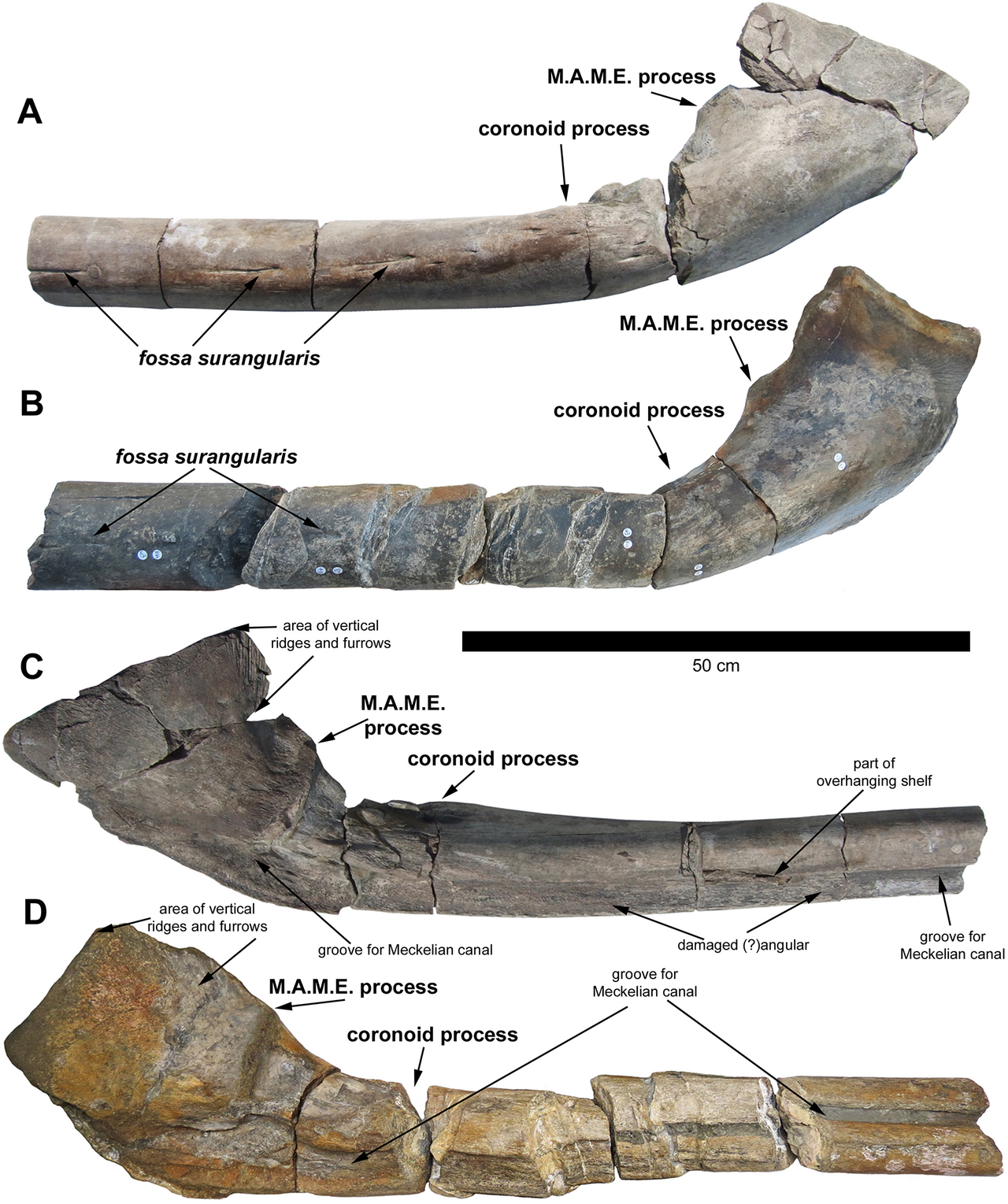
The journey to identify and understand Ichthyotitan has been a fascinating exercise in paleontological detective work, piecing together a colossal creature from remarkably fragmentary evidence. The genus I. severnensis is known primarily from two partial surangular bones of the lower jaw, discovered four years apart in different locations. These isolated yet massive fragments have been the key to unlocking the secrets of this marine giant.
The first crucial piece, known as the "Lilstock specimen" (cataloged as BRSMG Cg2488), was unearthed in 2016 by dedicated researcher and fossil collector Paul de la Salle from the Westbury Formation. This partial left surangular bone, measuring an impressive 96 centimetres (3.15 feet) long, immediately hinted at an animal of extraordinary size. In 2018, a team including Dean Lomax, Paul de la Salle, Judy Massare, and Ramues Gallois formally identified the Lilstock specimen as belonging to a shastasaurid. This seminal identification not only anchored the discovery but also prompted a reevaluation of other large bone fragments found in nearby Aust Cliff, which had previously been misidentified as belonging to large terrestrial archosaurs. These now-reinterpreted bones could potentially be further giant ichthyosaur fragments, perhaps from the surangular, hyoid, or other jaw bones, indicating the possibility of more widespread remains of such colossal creatures.
The second significant jaw fragment, found in 2020, further solidified the evidence for Ichthyotitan. While the specific details of this second find are still emerging, its existence reinforces the initial assessment of an enormous shastasaurid. Intriguingly, other specimens throughout Western Europe have been tentatively linked to I. severnensis based on similar osteological features, though their definitive affiliation remains uncertain. This suggests that while Ichthyotitan is currently known from limited remains, its relatives or even its direct lineage might have had a broader geographical spread, hinting at an even grander prehistoric saga yet to be fully uncovered. Discovering such massive creatures from mere fragments requires immense expertise, meticulous comparative anatomy, and a keen eye for detail—a testament to the dedication of paleontologists.
The Mammoth Scale: Estimating Ichthyotitan's True Size
One of the most captivating aspects of the Ichthyotitan discovery is the sheer scale it suggests. The estimated body length of nearly 25 metres (82 feet) places it in a league of its own, potentially making it the largest marine reptile currently known. This astonishing figure is derived through a rigorous scientific process: scaling up the known jaw fragments by comparing them to the proportions of more complete skeletons of other ichthyosaur species. This method, while challenging due to the fragmentary nature of the finds, provides the most accurate estimation possible.
To fully appreciate the magnitude of Ichthyotitan, it's helpful to compare it with other known ichthyosaur giants. For decades, Shonisaurus sikanniensis held the record as one of the largest, reaching lengths of almost 21 metres (70 feet). While impressive, Ichthyotitan comfortably surpasses this, underscoring its unparalleled size among its kind. The implications of an animal this large are profound for understanding the Late Triassic marine food web. An 82-foot predator would have required an immense amount of food, suggesting a highly productive ocean ecosystem capable of sustaining such megafauna. For more on the incredible size of this creature, delve into Ichthyotitan: Unearthing the Largest Marine Reptile Known.
Ichthyotitan's Legacy: Reshaping Our Understanding of Triassic Oceans
The unearthing of Ichthyotitan carries profound implications that ripple through our understanding of Late Triassic marine life and evolutionary history. Its legacy extends far beyond merely adding another giant to the prehistoric roster.
Extending the Shastasaurid Story: The most immediate and significant impact is the dramatic extension of the shastasaurid family's known temporal range by 13 million years. Before Ichthyotitan, it was largely thought that these colossal ichthyosaurs might have been in decline as the Triassic period drew to a close. Now, with Ichthyotitan thriving in the latest Triassic (Rhaetian), it paints a picture of a robust and successful lineage. This evidence is critical for paleontologists studying evolutionary patterns and the resilience of different animal groups.
Thriving Until the End: This discovery offers compelling evidence that shastasaurids were not fading into obscurity but were actively part of the dominant marine fauna right up until the catastrophic Triassic–Jurassic extinction event. This recontextualizes the pre-extinction environment, suggesting that the marine ecosystems were perhaps rich and stable enough to support such apex predators, indicating that their eventual demise was likely abrupt and externally driven, rather than a gradual decline due to environmental pressures or evolutionary stagnation.
Ecological Niche: An animal the size of Ichthyotitan, potentially the largest marine reptile, would have occupied a truly formidable ecological niche. Its existence implies a vast and flourishing food chain capable of supporting such an enormous predator. We can infer that the Late Triassic seas were teeming with abundant prey species, likely large fish and cephalopods, allowing these shastasaurids to reach such prodigious sizes. Ichthyotitan truly dominated its marine world, as explored further in Ichthyotitan: The 82-Foot Shastasaurid That Dominated Triassic Seas.
This single discovery underscores the dynamic nature of scientific inquiry. Every new fossil find has the potential to challenge established theories, rewrite evolutionary timelines, and deepen our appreciation for the incredible diversity of life that has graced our planet over geological eons.
Exploring the World of Ichthyosaurs: Beyond Ichthyotitan
While Ichthyotitan stands as a monumental figure, it's important to remember that it is part of a much larger, incredibly diverse group of marine reptiles known as ichthyosaurs. Often referred to as "fish-lizards" due to their streamlined, dolphin-like bodies and powerful tails, ichthyosaurs were highly successful aquatic predators that swam the world's oceans for millions of years, from the Early Triassic to the Late Cretaceous periods.
These fascinating creatures evolved convergently with modern cetaceans (whales and dolphins), developing similar adaptations for life in the water, including dorsal fins and powerful flukes. From smaller, more agile species to the immense giants like Ichthyotitan, ichthyosaurs showcased a remarkable range of sizes and forms, adapting to various marine environments and prey types. Understanding Ichthyotitan is thus an entry point into appreciating the broader tapestry of ichthyosaur evolution and the incredible ways life adapts to its surroundings.
For those inspired by such discoveries, there are many ways to engage with the world of paleontology. Visiting natural history museums offers a direct connection to these ancient wonders, allowing you to see fossil displays firsthand. Supporting paleontological research, either through donations or simply by staying informed about new finds, contributes to our collective knowledge. The story of Ichthyotitan reminds us that even with centuries of scientific exploration, our planet's past still holds countless secrets, waiting to be unearthed by curious minds and dedicated hands.
Practical Tips for Appreciating Paleontological Discoveries
- Visit Museums: Experience the scale and detail of fossils firsthand. Many museums have impressive ichthyosaur exhibits.
- Follow Scientific Journals & News: Stay updated on the latest discoveries from reputable sources. Websites of major natural history museums or university paleontology departments are excellent resources.
- Support Research: Consider supporting paleontological organizations or institutions. Every contribution helps fund fieldwork and laboratory analysis.
- Educate Yourself: Read books and documentaries about marine reptiles and the Mesozoic Era to deepen your understanding of the context of these finds.
Conclusion
The discovery of Ichthyotitan is a landmark moment in paleontology, offering unprecedented insights into the life and times of the Late Triassic period. This colossal shastasaurid, potentially the largest marine reptile ever known, not only rewrites the timeline for its family by an astonishing 13 million years but also provides compelling evidence that these giants were thriving just before a major global extinction event. From its fragmentary jawbones in Somerset, England, Ichthyotitan emerges as a powerful symbol of the sheer scale and evolutionary success of ancient life. As scientists continue to unearth and analyze these precious windows into the past, each discovery, like that of Ichthyotitan, reinforces the boundless wonder of Earth's history and the enduring mystery of its ancient inhabitants.